
Transcript · Download MP3 · Download MP4
Invitation
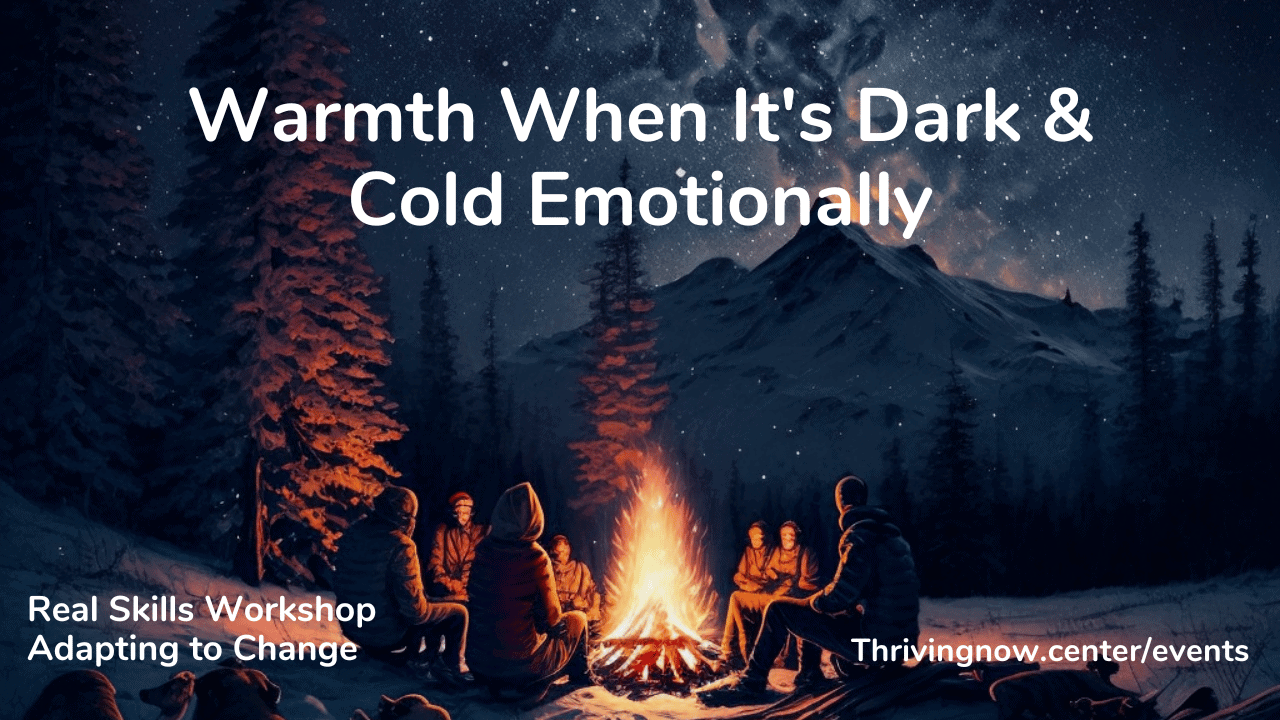
There are seasons when the inner world feels dark, cold, and far from comfort. We can feel lonely in a room full of people, ashamed that decades of healing have not made us permanently warm, or frozen around the belief that wanting care is weak and indulgent.
Humans have dark clouds. We have soul shivers. Emotional weather is not evidence that we failed.
Warmth is something we can invite, make, receive, share, and ask for—even before the darkness is solved.
This skill includes honest confrontation and genuine comfort. Sometimes we need to acknowledge what hurts. Sometimes the next wise action is tea, a blanket, movement, nature, a candle, a kind voice, or asking someone to remind us of what they value. Often we can bring both together.
Coldness Can Carry Childhood Shame
Small children interpret care through themselves. When caregivers are depleted, immature, frightened, absent, or unable to comfort, a child may conclude: I did something wrong. I am too much. I do not deserve warmth.
The body may freeze or collapse around need. As an adult, self-comfort can then activate the old shame: If I were stronger, I would not need this.
There were gaps in the care. That fact does not require condemning every caregiver, and it does not require pretending the gaps were harmless. Humans need comfort from themselves and others.
Tapping: Maybe I Never Deserved the Cold
Side of the Hand: Even though part of me thinks I deserved this cold, lonely feeling, and that belief makes me more ashamed and isolated, what if the missing warmth was never proof that I did something wrong?
Top of the Head: I send care back to my younger self.
Eyebrow: That little me was trying so hard.
Side of the Eye: I did not know how to comfort myself.
Under the Eye: I did not have enough power or resources.
Under the Nose: There may have been no more comfort available.
Chin: Part of me felt ashamed for wanting it.
Collarbone: There were real gaps in the care.
Under the Arm: Need was never the same as unworthiness.
Top of the Head: Adults and children both need comfort.
Eyebrow: From ourselves and from others.
Side of the Eye: I can learn what was not modeled.
Under the Eye: I can offer warmth without earning it first.
Under the Nose: I can ask without making myself pathetic.
Chin: I can receive without becoming helpless.
Collarbone: The cold experience is part of my history.
Under the Arm: It is not all of who I am.
Take a breath. Adjust your body five percent toward comfort if that feels possible.
Bring Warmth Into the Present Field
Past coldness can feel total because it was total to the younger nervous system. Present warmth helps update time.
Feel the chair, floor, clothing, and temperature. Notice shared experience: other humans have known dark and cold moments, even when each person was isolated at the time. A hand-made hat can carry the warmth of the maker. A circle of people can hold compassion. The body itself generates warmth.
We do not use present comfort to erase the past. We let the nervous system discover that coldness and connection can now occupy a larger field.
Tapping: There Is Warmth Present Now
Side of the Hand: Even though I remember times when attention felt cold and dark and I did not receive the comfort I needed, I am here now, and I am willing to notice any love, compassion, or shared humanity present with me.
Top of the Head: I have had cold and dark experiences.
Eyebrow: I am aware of that.
Side of the Eye: It is not all of who I am.
Under the Eye: I can bring warmth.
Under the Nose: I can bring warmth.
Chin: I am bringing warmth.
Collarbone: Others may be bringing warmth too.
Under the Arm: We have shared cold experiences.
Top of the Head: Even when we were alone at the time.
Eyebrow: I am open to feeling present connection.
Side of the Eye: The warmth in my own living body.
Under the Eye: The care contained in this object or space.
Under the Nose: The compassion of someone who understands.
Chin: I do not need to feel all of it.
Collarbone: One degree of warmth is meaningful.
Under the Arm: I can let that degree reach me.
Take a breath. Notice warmth literally before asking for an emotional shift.
Comfort Is an Action, Not a Moral Weakness
Cultures that prize toughness may frame comfort as indulgence. Yet comfort can restore the capacity needed for useful action. A cold person puts on a coat before doing meaningful work.
Comfort may be:
- wrapping up, drinking something warm, or changing the light;
- contacting someone safe;
- going into nature and actively noticing simple uplifts;
- moving enough to bring circulation and qi back online;
- receiving rhythm, music, scent, touch, or beauty;
- saying I have soul shivers instead of hiding behind competence.
Comfort is not automatically avoidance. Confrontation is not automatically courage. What matters is the function and fit.
Comfort or Confront? Tend the Soul
Confront means turning toward what is true for a tolerable interval: I feel disconnected. I am grieving. The old “I have no friends” message is active. Something needs attention.
Comfort means adding resources so the truth can be held: warmth, company, softness, movement, protection, or pleasure.
We can sequence them. Wrap in a blanket, make tea, light a candle, and ask what wants tending. Or acknowledge the feeling for seven seconds and then go outside looking for natural art. The choice is not forever. It may be for the next fifty seconds.
Tapping: Comfort and Confrontation Can Work Together
Side of the Hand: Even though it is hard to decide whether to comfort myself or confront these old issues, maybe I can tend my soul with a little of both and adjust as I learn what fits.
Top of the Head: Part of me wants to run away into comfort.
Eyebrow: That may be okay sometimes.
Side of the Eye: Sometimes a feeling needs to be named.
Under the Eye: I can wrap myself in a warm blanket.
Under the Nose: I can make tea or light a candle.
Chin: Then ask what in my soul wants tending.
Collarbone: I can try a little bit of both.
Under the Arm: And notice what fits this moment.
Top of the Head: I do not have to decide forever.
Eyebrow: Only for the next five minutes.
Side of the Eye: Or the next fifty seconds.
Under the Eye: I get to adjust what I give my body.
Under the Nose: More softness or more movement.
Chin: More company or more quiet.
Collarbone: I can dance with my being.
Under the Arm: Tending is wiser than pushing by rule.
Take a breath. Ask which comes first today: warmth, truth, movement, connection, or rest.
Balance the Energetic Medicine
When cold and dark arrive, some people collapse and stop moving. Others attack healing with relentless effort. Both can intensify imbalance.
If you become motionless, tapping, walking, shaking, sunlight, music, or a purposeful task may bring yang—movement and aliveness. If you push for hours, yin may be the medicine: softness, receiving, warmth, stillness, and enoughness.
We need both. Do not turn your strength into three hours of tapping until your fingers bruise. Do not turn tenderness into permanent withdrawal. Let the dose respond to the actual field.
Tapping: The Medicine Opposite My Habit
Side of the Hand: Even though I have a habitual way of surviving emotional cold—either collapsing or pushing—I am willing to experiment with the kind of warmth my system has been missing.
Top of the Head: When I go cold, I stop moving.
Eyebrow: Or I drive myself harder.
Side of the Eye: Both patterns once made sense.
Under the Eye: Neither has to be my only medicine.
Under the Nose: If I am frozen, I can invite gentle motion.
Chin: If I am driven, I can invite softness.
Collarbone: If I am isolated, I can signal one safe person.
Under the Arm: If I am flooded, I can create a quieter container.
Top of the Head: I am not fixing my whole season tonight.
Eyebrow: I am adding one source of warmth.
Side of the Eye: A little circulation, comfort, or contact.
Under the Eye: A little beauty my senses can receive.
Under the Nose: A little truth without drowning in it.
Chin: My system can learn another response.
Collarbone: Warmth can be crafted in micro-steps.
Under the Arm: I am allowed to tend myself skillfully.
Take a breath. Choose the smallest medicine that balances rather than reinforces your habit.
Ask for Human Warmth More Directly
Warmth is not entirely self-generated. Healthy interdependence includes asking.
Instead of waiting for someone to diagnose the clouds, try: My heart feels shivery. Could you offer a kind word? Would you remind me of something I did that you value? Could we sit together for ten minutes?
Choose people with capacity. A request is not a demand, and their no is not proof that the need is shameful. Another person, time, form, or source of warmth may fit.
Practices for Living This Skill
Name the Weather Without Becoming It
Say Cold weather is moving through my emotional world rather than I am a cold, lonely person.
Make a Warmth Menu While Resourced
List sensory, relational, physical, spiritual, playful, and practical sources. Use the list when clarity is low.
Add Five Percent Comfort
Shift position, temperature, light, texture, sound, or breath. Small changes help the body receive agency.
Confront in Tiny Intervals
Name the painful truth for seven to thirty seconds, then regulate. Increase only if integration is occurring.
Look for Simple Uplifts
On a walk, intentionally notice one glint of water, branch shape, color, animal, or piece of natural art.
Ask for One Specific Form of Warmth
Make the request small enough that another person can understand and freely answer.
Bringing It Into Your Life
Warmth is not evidence that darkness was imaginary. It is a living resource that helps us remain human inside the season.
We can honor the child who did not receive enough. We can comfort the adult who still shivers. We can confront what needs tending, move when frozen, soften when driven, and co-create spaces where I feel cold is met with curiosity rather than shame.
The clouds are here. The warmth is real. We can tend both.
Continue the Conversation
Questions, reflections, and real-life examples are welcome. Continue the conversation about Warmth When It's Dark & Cold Emotionally in the Thriving Now Center.