
Transcript · Download MP3 · Download MP4
Invitation
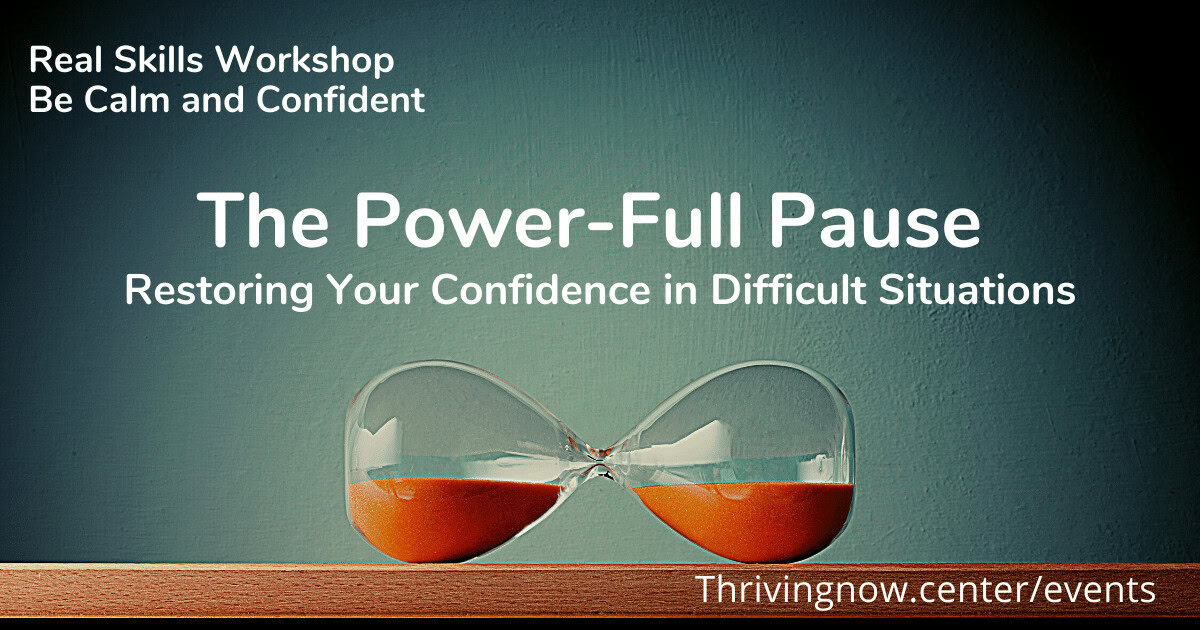
Imagine being able to pause a difficult moment the way we pause live television: enough time to use the bathroom, get nourishment, settle an interruption, or return in a better state.
Human dynamics, of course, do not freeze-frame on command. Yet we can learn to interrupt the rush from stimulus to reaction. Without that interruption, old survival recipes take over—recipes written by family, culture, fear, or a very young version of us.
A pause lets us notice when we are about to run today’s life using yesterday’s rotten-rose recipe.
The pause is not empty. It gathers scattered power, restores access to the body and heart, and gives choice a chance to enter.
Reaction Is Faster Than Thought
The body is designed for rapid protection. Step on something sharp and muscles shift before the thinking brain knows what happened. Emotional triggers can work the same way. A tone, expression, message, demand, or crashing sound sends us into fight, flight, freeze, or pleasing before we feel like ourselves.
That capacity is not a defect. It helps us survive. Trouble begins when every difficult moment is treated as if reflex is the only available intelligence.
A well-practiced pause creates a widening between stimulus and response. At first it may be only one breath, one tap on the collarbone, or one honest sentence: Something is happening in me. I need a moment.
The pause does not erase power. It consolidates power so we can choose how to use it.
A Pause Is Not the Same as Freeze
Sometimes we appear still while racing internally. We are holding our breath, bracing, rehearsing the comeback, or waiting for permission to resume running. That is not failure; it is useful information.
A more complete pause includes some contact with now:
- Feel your feet, fingertips, or the support beneath you.
- Let gravity do slightly more of the work.
- Notice whether you stopped breathing when attention entered the body.
- Name the activation without demanding instant calm.
- Ask whether you need seconds, twenty minutes, an hour, or a day.
The purpose is not to perform serenity. It is to regain enough of yourself to sense what matters and what comes next.
Tapping: “If I Pause, Something Is Wrong With Me”
Many of us learned to be quick, glib, useful, productive, and ready with an answer. A pause may feel awkward, unintelligent, weak, or socially dangerous.
Side of the Hand: Even though I learned to be quick on my feet and have an answer immediately, I am curious whether speed is always the same as wisdom.
Even though pausing feels weird and exposed, I may simply be exercising a capacity I was never shown how to use.
Even though part of me wants to check the box and race ahead, I want choices made with more of my brain, heart, and body.
Top of the Head: I should know what to say.
Eyebrow: I should not need this much time.
Side of the Eye: They may think I am slow or weak.
Under the Eye: They may become impatient.
Under the Nose: My body wants to hurry and please them.
Chin: I have not had many models for a living pause.
Collarbone: No wonder this feels awkward.
Under the Arm: Awkward can be the feeling of a new muscle waking up.
Top of the Head: What was said matters to me.
Eyebrow: That may be a reason to pause, not rush.
Side of the Eye: I can let one breath enter the conversation.
Under the Eye: I can feel gravity holding some of my weight.
Under the Nose: I can notice without solving everything.
Chin: My presence is not an intellectual failure.
Collarbone: A considered response may carry more truth.
Under the Arm: I am allowed to practice this imperfectly.
Top of the Head: I can begin where activation is small.
Eyebrow: Before I enter a room.
Side of the Eye: Before I open a message.
Under the Eye: Before I answer a request.
Under the Nose: Before I move from one task to another.
Chin: A little gathering before moving forward.
Collarbone: A half-halt for my nervous system.
Under the Arm: More choice and ease can grow from here.
Take an unforced breath. Notice whether the pause feels even slightly more like presence than deficiency.
Practice Before the Emergency
If the pause is reserved for activation at eight, nine, or ten out of ten, the primitive brain may never remember it. Build the pathway in ordinary transitions:
- before picking up a call;
- after reading a charged message;
- before walking through a doorway;
- while shifting between work and home;
- before embracing someone you care about;
- when activation first reaches two or three.
Small repetitions tell the nervous system: This is something we do when life matters. Later, the pause may arise automatically amid greater intensity.
Sometimes you will pause and still choose the familiar comfort, habit, or response. That is not a wasted pause. Conscious choice and blind reaction are different nervous-system experiences.
Give the Pause Relational Context
Silence without context can frighten people. They may assume withdrawal, punishment, abandonment, or that the conversation is over. A few words can tend the we-space:
- What you said matters to me. I need a moment to let it sink in.
- I want to make sure I heard you. Could you repeat that last part?
- This matters enough that I want to give you a considered answer.
- I am activated and cannot continue as myself. I will contact you within the day.
- I care about us. I need twenty minutes for my body to settle.
“This needs to stop” can sound like rupture. “You matter to me, and I need a pause” protects both connection and self-respect.
When possible, discuss cool-down styles before conflict. Some people need movement or solitude. Some need quiet proximity. Some need a specific return time so the pause does not feel like disappearance.
Catch the Yellow Light
Boundaries are easier to use before someone is against our nose. Pauses work the same way.
Learn your yellow-light signals:
- heat in the face or chest;
- a tightening voice;
- the urge to prove, correct, flee, or surrender;
- difficulty tracking what is being said;
- repeating the same point with more force;
- losing curiosity;
- a sudden feeling of being much younger.
At the red light, a pause may need to become a firm exit: I am not continuing this conversation now. Downstream, we can compassionately ask where the yellow light appeared and how we might recognize it sooner next time.
Tapping: When I Was Right and Still Caused Harm
We can have accurate information and deliver it from accumulated hurt. The pause helps separate the truth we need to express from old energy that does not belong entirely to the present person.
Side of the Hand: Even though I was right about important things and still spoke in a way I do not want to repeat, I can take responsibility without making myself irredeemable.
Even though I wish I had paused, my system was carrying more activation than I realized.
Even though my impact did not match my intention, compassion can help me repair and prepare differently.
Top of the Head: I was triggered.
Eyebrow: I had reasons.
Side of the Eye: The information still mattered.
Under the Eye: And my delivery caused harm.
Under the Nose: That is painful to admit.
Chin: This is not how I want to move through the world.
Collarbone: I can face the impact without erasing my truth.
Under the Arm: Both realities can belong.
Top of the Head: This person touched an older wound.
Eyebrow: Being dismissed, discounted, or patronized.
Side of the Eye: My body carried all of that into one moment.
Under the Eye: No wonder the reaction was bigger than the scene.
Under the Nose: The present person is not every person from my past.
Chin: I can move the older energy somewhere safer.
Collarbone: I can communicate the current truth more cleanly.
Under the Arm: Power does not require dumping every stored charge.
Top of the Head: I can apologize for how I delivered it.
Eyebrow: Without pretending the issue did not matter.
Side of the Eye: I can ask what repair would help.
Under the Eye: I can notice my yellow light sooner.
Under the Nose: I can pause, tap, walk, or seek support.
Chin: Accountability can include kindness toward me too.
Collarbone: I am learning emotional self-management.
Under the Arm: I can carry less harm into the next important conversation.
Take a breath. Notice whether compassion is available for both people, even in a very small amount.
The Pause Is Power-With
Power-over forces the pace and outcome. Power-with brings regulated presence into a shared field.
When one person lets gravity hold them, softens the rush, and speaks from a more gathered place, others’ mirror neurons receive that signal. They may resist it. They may remain activated. Yet the space is no longer being shaped only by whoever is most reactive or forceful.
This is vibrational leadership without domination: I am regulating my power. I am inviting enough room for more than primitive-brain urgency.
A pause can also create room for voices that fast groups overlook: Can we pause? I want to hear from the people who have not spoken yet.
When Someone Will Not Let You Pause
Some people keep talking, pushing, or deciding while you try to gather yourself. Begin with a gentle request, then strengthen the boundary as needed:
- Could we pause for a moment?
- Hold on. I need a break before continuing.
- I am not agreeing to that. I will respond after I have thought about it.
- I am leaving this conversation now. I will contact you by tomorrow.
You do not need their cooperation to stop participating. An exit is sometimes the pause your nervous system can believe.
Tapping: They Might Run Over Me If I Slow Down
Side of the Hand: Even though I am afraid that pausing gives them room to overpower me, I can slow myself without surrendering my boundary.
Even though they may judge me, interrupt me, or keep pushing, their speed does not have to become my consent.
Even though part of me equates urgency with strength, I am open to a form of power that stays present with me.
Top of the Head: They may think I am too slow.
Eyebrow: They may use the opening to take over.
Side of the Eye: My body wants to race them.
Under the Eye: Or freeze and let them decide.
Under the Nose: I can pause and still say no.
Chin: I can leave and return later.
Collarbone: I can repeat the boundary without defending it.
Under the Arm: Their impatience does not determine my answer.
Top of the Head: I want to judge myself as powerful and present.
Eyebrow: My pace can serve clarity.
Side of the Eye: My pause can protect the relationship from my reactivity.
Under the Eye: It can also protect me from theirs.
Under the Nose: I can choose a return time that is honest.
Chin: I can seek help when the situation is not safe.
Collarbone: Calm power still has edges and exits.
Under the Arm: I am gathering myself, not giving myself away.
Feel the support beneath you. Try the words: I am taking a pause. I will decide when I am ready.
Practices for Living This Skill
Pause at transitions
Before opening the next app, entering the next room, or beginning the next conversation, feel one physical sensation.
Name your yellow lights
Write down three signs that appear before you lose choice. Put them where you will see them.
Prepare one relational phrase
Choose a sentence you can remember under pressure. Practice saying it aloud until it feels like yours.
Learn your cool-down style
Do you settle through walking, quiet, tapping, water, writing, or co-regulation? What return time is believable?
Rehearse a missed pause
Imagine a recent scene. Locate one earlier branch point and picture yourself adding ten seconds, one boundary, or one exit.
Let gravity help
Release five percent of the effort in your shoulders, jaw, or belly. Notice how your voice changes when the body is less braced.
Repair without surrendering the issue
Try: I stand by the concern I raised, and I do not stand by the way I spoke. I want to repair that.
Bringing It Into Your Life
We will almost certainly still react, freeze, rush, or say something we wish we had shaped differently. The skill is not permanent composure. It is increasing access to ourselves—and returning sooner when access is lost.
Each small pause teaches the primitive brain that survival and thriving may be served by gathering before acting. Over time, the space between impulse and action becomes less empty and more alive with body, heart, discernment, and choice.
Pause because the moment matters—not because your feelings do not.
Gather. Feel. Choose. Return with more of yourself.
Continue the Conversation
Questions, reflections, and real-life examples are welcome. Continue the conversation about The Power-Full Pause in the Thriving Now Center.