
Transcript · Download MP3 · Download MP4
Invitation
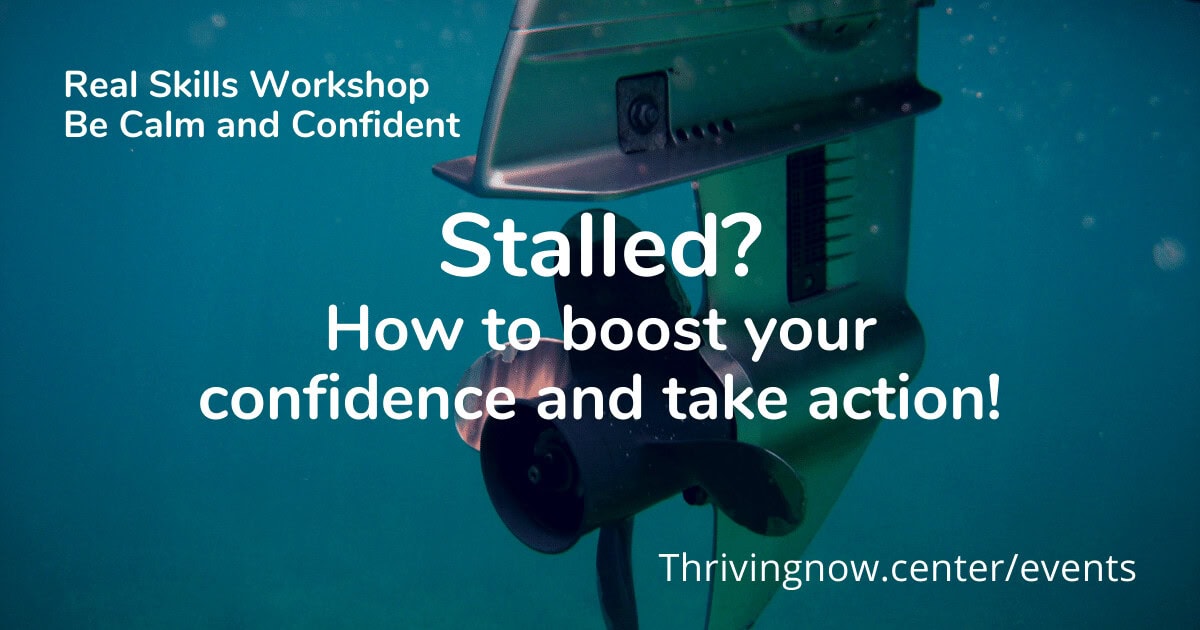
A stall is not necessarily freeze, a deep block, or being stuck in concrete. The desire is still alive. We think about the laundry, message, music, movement, repair, or meaningful project—but the engine does not engage.
Each pass by the stalled thing can drain a little energy and become evidence against our identity. We bang on ourselves as though punishment will start the motor.
A stall can become a “so far” and “not yet” moment—a pause for recalibration, awareness, choice, and experiment.
Diagnose the Energy Before Prescribing Action
Stalled, stuck, and blocked need different care. A stall may respond to quieting noise and creating a small movement. Being stuck may involve intense fear or a painful prior event. A subconscious block may predict that the whole direction is dangerous.
We may also be out of gas, overheated, overloaded, grieving, or carrying ten tons of meaning in a small pickup. Skill begins with asking what condition is present, not automatically pushing harder.
Tapping: Gas and Brake at the Same Time
Side of the Hand: Even though one part orders me to get everything done and another says stop, danger, no wonder my engine is not moving.
Even though I criticize myself for the stall, both voices may be trying to protect me from pain in different ways.
Even though old messages are loud, I can quiet the noise before deciding whether action is right.
Top of the Head: Get it done right now.
Eyebrow: No way—stop immediately.
Side of the Eye: My foot is on gas and brake.
Under the Eye: I am frustrated and afraid.
Under the Nose: Every day the stall drains more energy.
Chin: Then I use the stall as proof against myself.
Collarbone: These voices are not bad.
Under the Arm: They may not know what is right for me now.
Top of the Head: I can let the engine become quiet.
Eyebrow: I can notice whether I am empty or overheated.
Side of the Eye: I can name fear without forcing through it.
Under the Eye: I can separate this stall from old judgments.
Under the Nose: Beneath the noise, what still matters?
Chin: What does my heart actually want here?
Collarbone: Calm can make room for my own direction.
Under the Arm: Action does not have to come from adrenaline.
Recover Why It Matters Now
The past is noisy: how long it has waited, previous failed attempts, what others said, and who we think we should already be. Acknowledge that history, then distinguish it from the present value.
Ask: Does this still matter to me? Why? What quality of life, care, expression, connection, or completion does it support now? If there is no living yes, release or renegotiate it. Confidence is not forcing ourselves to complete every obsolete intention.
Tapping: The History Is Louder Than What Matters
Side of the Hand: Even though I have a history of not getting this done and I have feelings about that, the past is not identical to what matters now.
Even though I am ashamed of how long this has waited, shame does not tell me whether the action is still a yes.
Even though old attempts deserve acknowledgment, I can ask fresh what I want to serve.
Top of the Head: It has not been done.
Eyebrow: I have walked past it again and again.
Side of the Eye: The past shouts failure.
Under the Eye: Other people’s comments echo too.
Under the Nose: I acknowledge the unwanted reality.
Chin: And I return to present time.
Collarbone: What matters to me now?
Under the Arm: Is there still a living yes here?
Top of the Head: If it is no longer mine, I can release it.
Eyebrow: If it is mine, I can name why.
Side of the Eye: Not because I am defective without it.
Under the Eye: Because it supports something I value.
Under the Nose: Joy, order, care, music, service, or connection.
Chin: Meaning can power a different engine.
Collarbone: I can choose rather than coerce.
Under the Arm: What matters gets a fresh relationship with me.
Restore Multiple Choice
Primitive-brain pressure narrows the options to do the whole thing or fail. Calm makes alternatives visible: ask for help, reduce the scope, use a different tool, change the environment, stop for now, delegate, play, or take one reversible action.
If the goal is “play piano,” the action may be touching one key and feeling its vibration. If the goal is a collage, it may be placing one image without committing to the finished design. A small movement changes the field and produces information.
Create a Twenty-Minute Container
Choose something you can hold in your hand rather than a lifelong identity project. Ask what could be done in ten or twenty minutes without risking health, essential money, property, or safety.
The container is not a trick that secretly requires finishing. Stop when complete. Reliability with our own limits builds more confidence than repeatedly turning “five minutes” into an ambush.
Tapping: I Cannot Force Myself Anymore
Side of the Hand: Even though I cannot force myself the way I used to, perhaps emotional freedom is making coercion less available for a reason.
Even though part of me fears I will never act without pressure, choice, meaning, experiment, and support can also move energy.
Even though a tiny step seems insignificant, it can restart contact without loading the whole truck onto this moment.
Top of the Head: I should be able to force this.
Eyebrow: That is how I used to get things done.
Side of the Eye: Pressure is no longer working well.
Under the Eye: Maybe that is not entirely bad news.
Under the Nose: What choices exist besides force and avoidance?
Chin: Help, play, delegation, reduction, or a pause.
Collarbone: One action can be an experiment.
Under the Arm: It does not have to prove anything about me.
Top of the Head: What could I do in twenty minutes or less?
Eyebrow: What is safe enough to touch today?
Side of the Eye: I can make one note, call, placement, or request.
Under the Eye: Then I can observe what changed.
Under the Nose: Momentum is welcome but not demanded.
Chin: I can stop at the boundary I promised.
Collarbone: Trust grows when I do not ambush myself.
Under the Arm: Calm, choice, and meaning can inspire action.
Practices for Living This Skill
Name the state accurately
Distinguish a light stall from trauma-driven stuckness, a subconscious block, exhaustion, and a true no.
Quiet before clarifying
Ground and tap until gas-and-brake noise softens enough to hear your own signal.
Ask why it matters now
Use present values rather than accumulated shame as the source of energy.
Generate at least three options
Include support, a smaller step, a different method, pausing, delegating, and releasing.
Use an honest container
Set a short time or tiny action and honor its endpoint.
Notice what the movement teaches
Afterward, ask whether energy increased, resistance clarified, help became obvious, or the goal changed.
Bringing It Into Your Life
Meaningful lives include stalls. Weather changes. Bodies run out of fuel. Old methods stop fitting. What mattered before may need a new form.
Confidence is not uninterrupted motion. It is knowing we can pause without turning the pause into a verdict—and that we can use calm, clarity, multiple choice, and experiment to find movement again.
**”So far” is not forever. “Not yet” is not never.**
Quiet the noise. Remember what matters. Restore choice. Touch one step.
Continue the Conversation
Questions, reflections, and real-life examples are welcome. Continue the conversation about Stalled? How to boost your confidence and take action! in the Thriving Now Center.