
Transcript · Download MP3 · Download MP4
Invitation
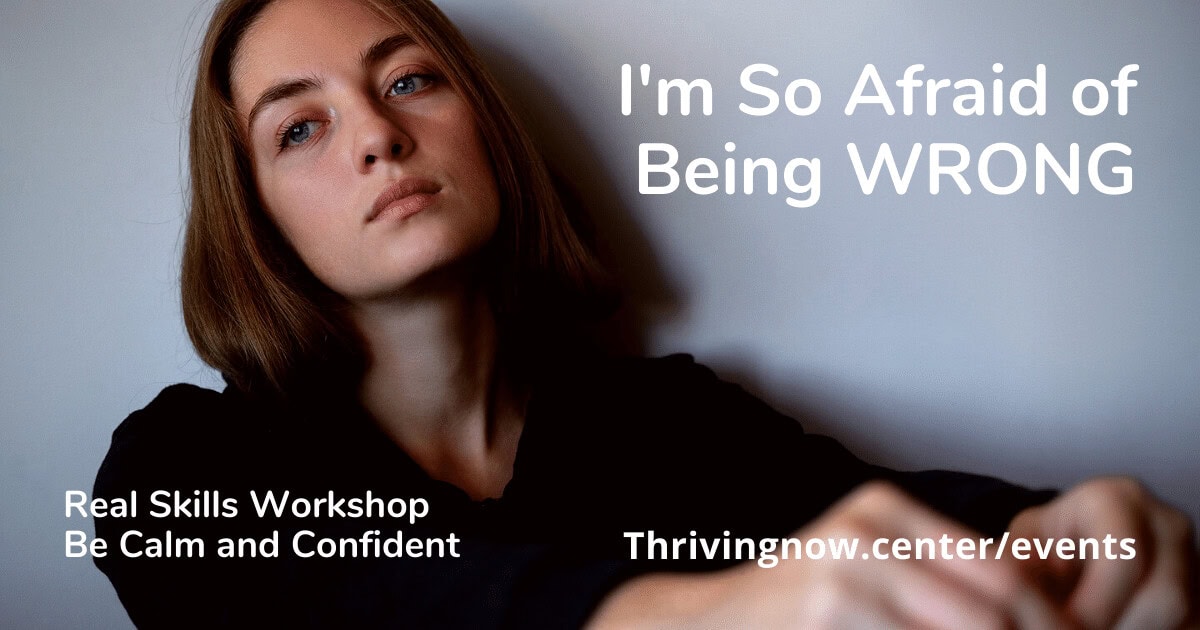
There is a profound difference between I did something that did not work and I am wrong. One describes an action or outcome. The other drives wrongness into our core identity.
When criticism, punishment, exclusion, or overwhelmed caregivers trained us to feel wrong at the core, every mistake can echo through that old chamber. We may apologize reflexively, perform perfection, hide, avoid learning, or let other people steer us through shame.
We can care deeply about our impact without making wrongness our identity.
When Not Fitting In Becomes “I Am Wrong”
For a child, belonging is survival. Difference can feel dangerous when family, school, religion, gender roles, culture, or peers do not reflect who we are. The primitive brain may conclude: If I do not fit, I must be wrong.
Now there are billions of people and many ways to find kin. We do not need to mesh with everyone. Authentic belonging begins by loosening the demand to pretend.
Tapping: I Did Not Fit, So I Must Be Wrong
Side of the Hand: Even though I did not fit with the people around me and part of me decided that meant I was wrong, belonging mattered to my survival brain.
Even though judgment and exclusion still land hard, difference is not proof of defectiveness.
Even though pretending helped protect me, I want relationships where more of my real self can belong.
Top of the Head: I did not fit in.
Eyebrow: Sometimes I still do not fit.
Side of the Eye: Their faces told me I was different.
Under the Eye: My body translated different into wrong.
Under the Nose: Fitting in once felt like survival.
Chin: No wonder I learned to hide and perform.
Collarbone: That strategy was protective.
Under the Arm: It does not have to define me forever.
Top of the Head: I will not fit with everyone.
Eyebrow: There are people who can recognize me.
Side of the Eye: I can seek spaces with more safety and respect.
Under the Eye: I can reveal myself in calibrated doses.
Under the Nose: Authenticity and discernment can work together.
Chin: Difference may be part of my gift.
Collarbone: I am allowed to feel right in my own being.
Under the Arm: I am finding where real belonging grows.
Why a Child May Choose Self-Blame
Seeing a caregiver as overwhelmed, cruel, addicted, unstable, or unable to repair can be terrifying. They are driving the vehicle of our life. Believing I am wrong preserves the hope that if we improve enough, safety and love will return.
That conclusion may have protected sanity. Adult awareness can now hold a more difficult truth: powerful people sometimes blamed a child because they lacked regulation, capacity, or skill. Their certainty did not make their verdict true.
Tapping: Thank You to the Child Who Took the Blame
Side of the Hand: Even though my younger self sacrificed their sense of rightness to preserve hope and attachment, that may have been the safest meaning available.
Even though it hurts to see that the adults were not always capable or fair, I do not need to shame the child for choosing self-blame.
Even though their wrongness filled the room and I was porous, I can begin returning what was never mine.
Top of the Head: Hey, younger me—you decided you were wrong.
Eyebrow: Then the powerful adults could still seem okay.
Side of the Eye: You kept hoping you could fix it.
Under the Eye: That was a brilliant survival strategy.
Under the Nose: And it cost us so much.
Chin: You sacrificed your sense of rightness.
Collarbone: I am grateful you carried us through.
Under the Arm: You do not have to carry this alone now.
Top of the Head: Their blame was not an objective truth.
Eyebrow: Their distress may have belonged to them.
Side of the Eye: I can feel grief and anger in safe doses.
Under the Eye: I can get support for what remains intense.
Under the Nose: I am not that powerless child now.
Chin: I can examine what happened with adult eyes.
Collarbone: What is mine is mine; what is theirs is theirs.
Under the Arm: I invite my core sense of self back home.
Move from Identity to Discernment
When something feels wrong, ask: Did I do something I want to repair? Did an outcome differ from what I intended? Is this situation in conflict with my values? Or has someone activated the old identity wound?
“This feels wrong to me” is a sensor. It allows inquiry. “I am wrong” ends inquiry and turns every imperfection into proof.
We can apologize, make amends, learn, and improve without collapsing. We can also decide that another person’s disappointment, preference, or forceful criticism does not establish our guilt.
Perfectionism Is Wrongness in Costume
If being wrong feels existential, perfectionism promises rescue: Never make a mistake and no one can expose you. But perfectionism blocks experimentation, creativity, and skill-building. It also leaves us vulnerable to anyone who demands impossible certainty.
Many choices are not morally right or wrong. They are paths with different consequences and information. Even a poor choice can teach, redirect, or reveal what matters.
Tapping: I Can Do Something Wrong Without Being Wrong
Side of the Hand: Even though mistakes and criticism still land in the old bucket of “I am wrong,” I want separate containers for learning, repair, preference, and values.
Even though perfectionism says I must prevent every bad outcome, being human includes incomplete information and unintended impact.
Even though I care about doing right, care becomes more useful when I am not crushed by identity shame.
Top of the Head: Here is that “I am wrong” feeling again.
Eyebrow: My nervous system treats it like a nail in the foot.
Side of the Eye: What if I am wrong about always being wrong?
Under the Eye: What if this action simply did not work?
Under the Nose: What if a repair belongs here?
Chin: What if this conflicts with my values?
Collarbone: What if their demand is not mine to meet?
Under the Arm: I can discern instead of collapse.
Top of the Head: I can do something wrong without being wrong.
Eyebrow: I can care and still remain whole.
Side of the Eye: I can apologize without self-erasure.
Under the Eye: I can learn without self-punishment.
Under the Nose: I can tolerate someone else’s disapproval.
Chin: I can practice where mistakes are survivable.
Collarbone: Confidence grows through honest experience.
Under the Arm: My values—not shame—can guide my next move.
Practices for Living This Skill
Change the grammar
Replace “I am wrong” with a specific description: “I missed that,” “They disagree,” “This feels misaligned,” or “I want to repair this.”
Check the scale
Ask how intense the issue is for the other person rather than treating every unhappy expression as relationship-ending.
Build other legs of identity
Name qualities you value in yourself—kindness, persistence, honesty, creativity, service—so wrongness is not the single pillar holding everything up.
Practice survivable imperfection
Experiment where an error will not endanger anyone. Let the body learn that mistakes can produce information rather than exile.
Repair concretely
When harm is yours, acknowledge impact, make an appropriate repair, and change the behavior. Do not substitute self-attack for accountability.
Seek support for core shame
If wrongness activates self-harm, collapse, or overwhelming trauma, do not force yourself through it alone.
Bringing It Into Your Life
The goal is not to become arrogantly certain or indifferent to impact. It is to develop an inner ground sturdy enough for feedback, learning, apology, intuition, boundaries, and play.
Those who carried “I am wrong” often care intensely about doing what is right. Freed from shame, that caring can become discernment and devoted action.
I can be imperfect, accountable, and fundamentally worthy at the same time.
Not a verdict. A human learning. A core reclaimed.
Continue the Conversation
Questions, reflections, and real-life examples are welcome. Continue the conversation about I'm So Afraid of Being WRONG in the Thriving Now Center.