
Transcript · Download MP3 · Download MP4
Invitation
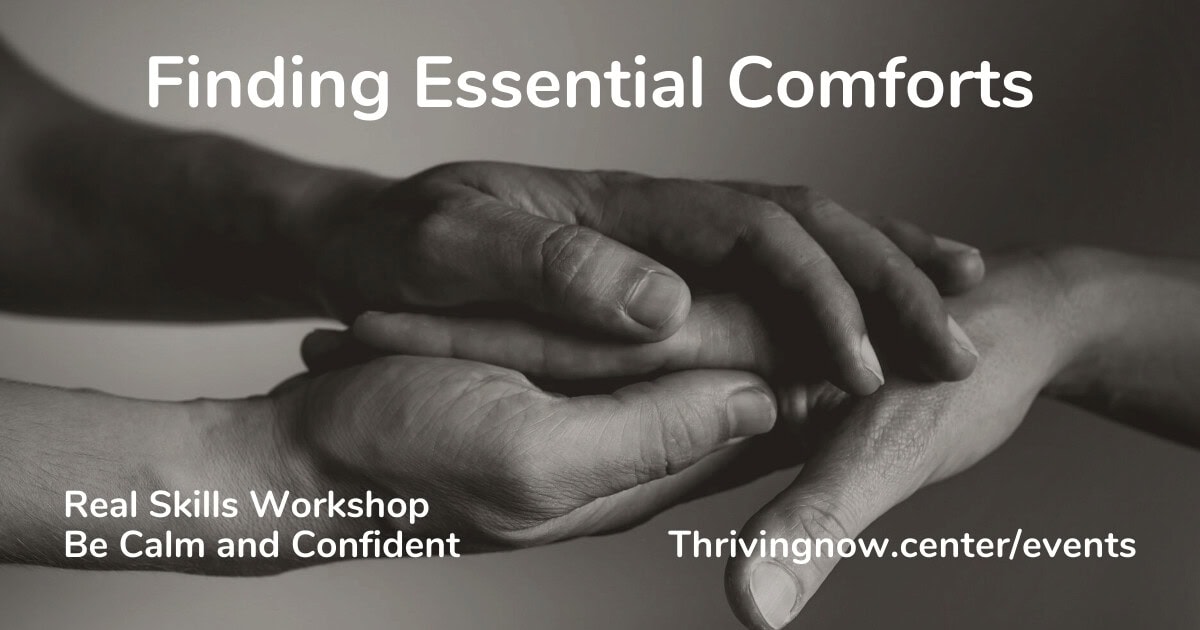
Comfort is often treated as weakness, indulgence, or a reward after all useful work is done. Yet nervous systems need signals of enough safety, support, warmth, and ease to regulate and renew.
We may have only one familiar comfort—food, scrolling, a particular person—and use it quickly enough to blunt distress without ever receiving the experience.
Comfort is an essential nutrient and a portal for changing state. Skill gives us more ways to find it, receive it, and choose it consciously.
Comfort Must Actually Reach You
Someone can offer what they believe should be enough while your body remains under-comforted. Their estimate is not automatically more accurate than your need.
Notice what happens when comfort is offered. Does it bounce off? Create suspicion? Bring grief? Feel too small, too much, or the wrong flavor?
We can request more, seek another source, or comfort ourselves without declaring the first person bad.
Tapping: I Should Not Need This Much Comfort
Side of the Hand: Even though part of me judges how much comfort I need, my body has lived through what it has lived through.
Even though someone else may think this should be enough, I can listen to what actually reaches my system.
Even though I fear being dramatic or needy, comfort is a human regulation need—not a moral failure.
Top of the Head: I should be over this.
Eyebrow: I should not need so much.
Side of the Eye: Other people seem stronger.
Under the Eye: My body is still asking.
Under the Nose: I can listen without making it an unlimited demand.
Chin: I can seek another source or form.
Collarbone: There is more comfort in the world than one person carries.
Under the Arm: My need deserves conscious tending.
Top of the Head: I can ask, “Do you have time to talk?”
Eyebrow: I can hold my own heart while I wait.
Side of the Eye: I can choose a sensory comfort now.
Under the Eye: I am not required to sit silently hoping someone notices.
Under the Nose: Comfort can be intentional.
Chin: A small dose can still help.
Collarbone: I let what fits reach me.
Under the Arm: My nervous system is allowed nourishment.
Distinguish Comfort From Coping
Coping helps us endure a state. Comfort changes our relationship with it.
We might inhale food or scroll until numbed and receive little sensory nourishment. The same food, approached slowly and intentionally, may downshift tension and create presence.
This is not a purity test. Sometimes coping is what capacity allows. The question is whether we can add five seconds of actual receiving.
Comfort should not suppress every difficult feeling. It can give us enough resource to feel grief, fear, or anger without drowning.
Tapping: My Old Comfort Is the Only Thing That Works
Side of the Hand: Even though I reach for the same comfort automatically, it helped me survive states I did not know how to manage.
Even though it sometimes becomes numbing rather than nourishment, I will not shame the strategy that carried me.
Even though I want more choice, I can add possibilities before trying to rip the old one away.
Top of the Head: This is my tried and true comfort.
Eyebrow: My brain knows the pathway.
Side of the Eye: It works fast enough to help me cope.
Under the Eye: Sometimes I barely experience it.
Under the Nose: I can slow one moment down.
Chin: Smell, taste, texture, warmth, and care.
Collarbone: I can let part of it become real comfort.
Under the Arm: I do not have to abandon the old favorite today.
Top of the Head: I invite my brain to notice new ways.
Eyebrow: I invite my heart to explore and play.
Side of the Eye: One additional comfort expands my freedom.
Under the Eye: I can choose according to the moment.
Under the Nose: I can feel and still be comforted.
Chin: Comfort can support processing rather than avoidance.
Collarbone: My menu is becoming more resilient.
Under the Arm: More pathways lead back toward okayness.
Build a Sensory Comfort Menu
Create options that are at your fingertips.
Sight
A photograph, tree, color, candle, artwork, beloved object, sky, or animal.
Sound
Music, a single instrument note, a familiar voice, rain, humming, silence, or guided support.
Smell
Coffee, bread, essential oil, soap, a pet’s remembered scent, tree bark, air after rain.
Taste
A warm drink, maple, spice, fruit, soup, or an old favorite received slowly enough to register.
Touch and body position
A hand on the heart, holding the back of the head, crossing the body to hold an ankle, a blanket, warmth, pressure, or letting the tongue rest in the hammock of the jaw.
The point is not a perfect list. It is recognizing portals that reliably shift state.
Anchor Comfort Through Intention
When applying an oil, sipping a drink, or touching the heart, name the intention: This is for comfort. Then notice any change.
Repeated pairings teach the primitive brain the pathway. Comfort becomes easier to access, and receiving consensual comfort from others may become less foreign.
Tapping: Comfort Bounces Off Me
Side of the Hand: Even though comfort does not always reach me, an undernourished or activated system may need time before it can absorb.
Even though lying down can first expose anxiety, I can stay with a tolerable dose or choose active comfort.
Even though receiving from others feels unfamiliar, I can practice pathways with myself and consent.
Top of the Head: Comfort bounces off.
Eyebrow: My system is still revved.
Side of the Eye: Softness may expose what I was holding.
Under the Eye: Nothing is wrong with me.
Under the Nose: I can walk, sway, tap, or breathe first.
Chin: I can choose a cleaner comfort for this moment.
Collarbone: Five seconds may be enough practice.
Under the Arm: Absorption can deepen over time.
Top of the Head: My body can learn the route.
Eyebrow: Eyes, ears, nose, mouth, skin, and posture.
Side of the Eye: Many doors can open toward regulation.
Under the Eye: I remain free to stop what does not fit.
Under the Nose: I can ask before touch and receive with consent.
Chin: Comfort strengthens relationship with myself.
Collarbone: It can strengthen safe relationship with others.
Under the Arm: I am becoming skillful at finding and letting in support.
Practices for Living This Skill
Make the five-sense menu
List at least three accessible comforts for each sense.
Add intention
Name that you are using the experience for comfort and track the body’s response.
Slow the old favorite
Turn five seconds of automatic coping into conscious receiving.
Choose according to state
Use active comfort when stillness intensifies activation; quieter comfort when the body is ready.
Request specifically
Ask for a call, listening, pressure, warmth, company, or another concrete form—with consent.
Avoid the grief-loaded option when needed
A beloved photo may comfort one day and open grief another. Choose flexibly.
Notice new portals
Let surprising postures, sounds, scents, and ordinary objects enter the menu.
Bringing It Into Your Life
We will still default to the familiar, miss comfort that is present, or discover that what once soothed no longer does. A living menu changes with season, body, grief, and context.
Comfort does not make us weak. It gives the primitive brain experience with returning from activation and helps us become more available for life.
We are not limited to enduring distress. We can cultivate pathways toward supported, embodied okayness.
Find the portal. Receive the dose. Let comfort become a skill.
Continue the Conversation
Questions, reflections, and real-life examples are welcome. Continue the conversation about Finding Essential Comforts – Old Favorites and New Possibilities in the Thriving Now Center.