
Transcript · Download MP3 · Download MP4
Invitation
Humans are relational animals. The primitive brain treats isolation as a survival threat: without the tribe, who will protect us, help with the children, share resources, or notice if we disappear?
Modern life can keep us physically alive while deeply undernourished for co-presence, touch, shared effort, ritual, and belonging. We can also feel isolated in a crowded room or family that does not meet us where we live emotionally.
Calming the primal alarm does not erase the yearning. It lets yearning become guidance instead of catastrophe.
Feeling Isolated Does Not Mean You Are Doing Life Wrong
Holiday images, social media, and cultural ideals can turn loneliness into shame: Everyone else is connected. There must be something wrong with me.
Isolation is a feeling and a signal, not a character verdict. Like hunger or low vitamin C, it may indicate that a nutrient is missing. We can respect the need without declaring ourselves unlovable.
Tapping: I Must Be Doing This Wrong
Side of the Hand: Even though feeling isolated convinces me that I have failed at being human, this reaction comes from a brain designed to keep me connected.
Even though other people seem surrounded by belonging, I do not know the quality of their inner experience.
Even though I want more connection, wanting it does not prove something is wrong with me.
Top of the Head: I am not doing this right.
Eyebrow: Other people know how to belong.
Side of the Eye: I feel outside the warm picture.
Under the Eye: My primitive brain sounds the alarm.
Under the Nose: Isolation once meant real danger.
Chin: Right now, am I in immediate danger?
Collarbone: I can soothe the survival layer first.
Under the Arm: The yearning can remain without the shame.
Top of the Head: This is definitely a feeling.
Eyebrow: It is giving me relational information.
Side of the Eye: I am not wrong for needing connection.
Under the Eye: I can be calm enough to hear the kind I need.
Under the Nose: Physical, emotional, playful, spiritual, practical.
Chin: One form may be unavailable today.
Collarbone: Other forms may still nourish me.
Under the Arm: I can seek connection without making myself defective.
Connect to Yourself Before Reaching Out
When isolation triggers panic, we may grab at people who are unavailable or unsafe, or demand one interaction carry the whole unmet need.
First offer the body company. Put a hand on the heart, back of the head, belly, or pelvis. Feel the chair and floor. Follow one breath and heartbeat. Say, I am here with you.
Self-connection is not a replacement for people. It gives the primitive brain enough accompaniment to choose the next contact more wisely.
Separate Now From Then
Current isolation can activate childhood moments of being unattended, excluded, emotionally unseen, or left without enough care. Ask for the timestamp.
Then was real. Now may still hurt. Adult You may also have a phone, transportation, language, communities, spiritual practice, money, or options that Younger You did not.
Tapping: This Loneliness Feels Ancient
Side of the Hand: Even though today’s isolation opens an older loneliness, I honor how terrifying that was when I had so few choices.
Even though my body merges the timelines, I can bring Adult Me into the scene without denying either one.
Even though some of what I need is still missing now, not all of the old danger is happening today.
Top of the Head: This feels ancient.
Eyebrow: No one is coming.
Side of the Eye: I could disappear and not be found.
Under the Eye: That younger part needed a dependable tribe.
Under the Nose: I offer them my presence now.
Chin: We have more resources than we had then.
Collarbone: I can name what is old and what is current.
Under the Arm: The timelines do not have to stay fused.
Top of the Head: Current Me still wants connection.
Eyebrow: That yearning is worthy.
Side of the Eye: I can seek one tolerable dose.
Under the Eye: A message, voice, shared task, or warm face.
Under the Nose: I can choose people more carefully.
Chin: I can receive support without becoming that abandoned child again.
Collarbone: I am here, and others may be reachable.
Under the Arm: My nervous system can learn connection in present time.
Isolation and Solitude Are Different States
Solitude can be spacious, creative, spiritual, and restorative. Isolation feels imposed, disconnected, or unsafe.
We may move between them without changing location. Calming the alarm can reveal that some aloneness is welcome. Or it can clarify that we truly need contact and should not spiritualize the need away.
Let Yearning Reveal the Form of Connection
“I need people” is too broad to guide action. Ask what the body longs for:
- Touch or physical proximity?
- A voice that knows us?
- Shared work or caregiving?
- Play, movement, ritual, or a meal?
- Emotional witness?
- Intellectual or spiritual kinship?
- A sense of contributing to a group?
The full dose may not be available. A partial dose still counts.
Tapping: I Cannot Get the Connection I Really Want
Side of the Hand: Even though the form I crave is not available, I will not pretend a substitute is identical.
Even though a screen, message, or neighbor cannot supply everything, some connection may still reach me.
Even though yearning hurts, it also reveals what matters enough to cultivate.
Top of the Head: I want real closeness.
Eyebrow: Not a token interaction.
Side of the Eye: I miss shared space and shared effort.
Under the Eye: I am allowed to grieve that.
Under the Nose: I can receive what is available without calling it everything.
Chin: A partial nutrient is still nourishment.
Collarbone: I can make one clear invitation.
Under the Arm: I can build toward the connection I value.
Top of the Head: I may feel hearts connected across distance.
Eyebrow: Spiritual connection can be real for me.
Side of the Eye: It does not cancel physical need.
Under the Eye: Both truths can belong.
Under the Nose: I can soothe, reach, receive, and cultivate.
Chin: I do not have to solve belonging tonight.
Collarbone: One genuine contact can alter this hour.
Under the Arm: I am part of a human field, even while I yearn for more.
Practices for Living This Skill
Soothe the primal alarm
Orient to immediate safety before interpreting isolation as a life verdict.
Offer self-company
Use touch, breath, heartbeat, voice, and grounding to say, I am here with you.
Ask for the timestamp
Separate childhood abandonment from today’s loneliness and resources.
Name the missing nutrient
Identify the specific flavor of connection rather than demanding “people” in general.
Seek one dose
Send a clear message, join a shared activity, ask for a call, work alongside someone, or exchange warmth with a neighbor.
Create ritual
Recurring meals, walks, calls, classes, or community gatherings make connection more reliable.
Honor solitude when it is true
Do not pathologize aloneness that genuinely restores you.
Bringing It Into Your Life
There will be moments when connection is not available in the form or depth we need. Calm confidence alone does not make that painless.
It does help us remain with ourselves, recognize the difference between threat and yearning, and take a relational step without making one unavailable person responsible for our whole belonging.
We can feel isolated without being wrong, soothe survival without suppressing need, and let yearning guide us toward the tribe we are still creating.
Here with myself. Connected where possible. Honest about what I long for.
Continue the Conversation
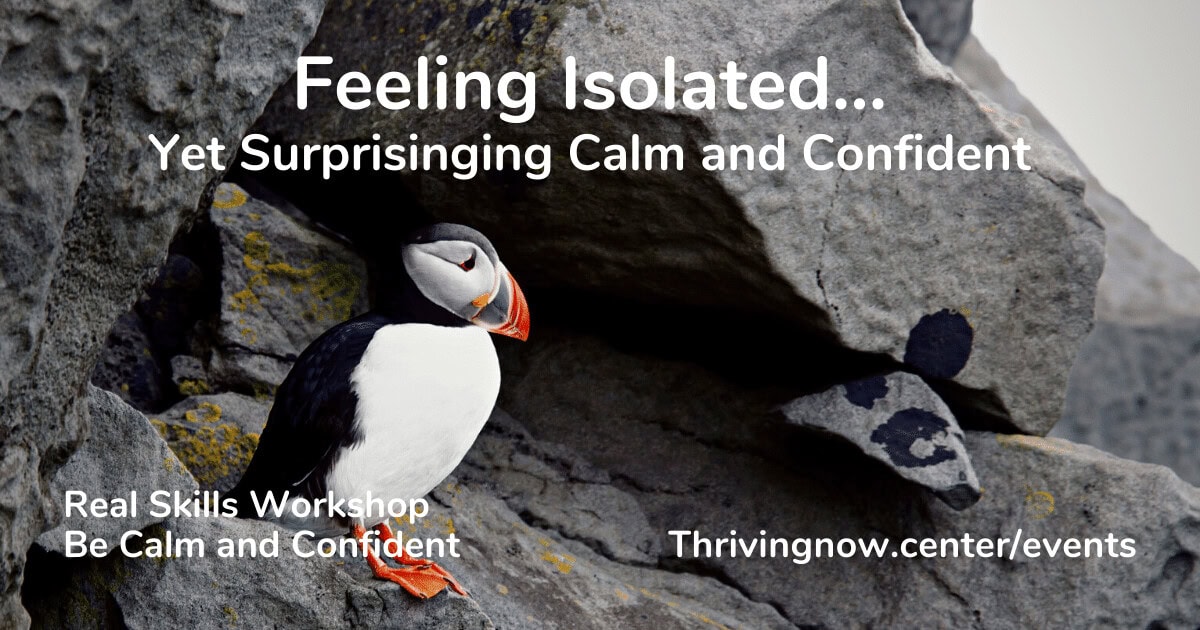
Questions, reflections, and real-life examples are welcome. Continue the conversation about Feeling Isolated… Yet Surprisingly Calm and Confident in the Thriving Now Center.