
Transcript · Download MP3 · Download MP4
Invitation
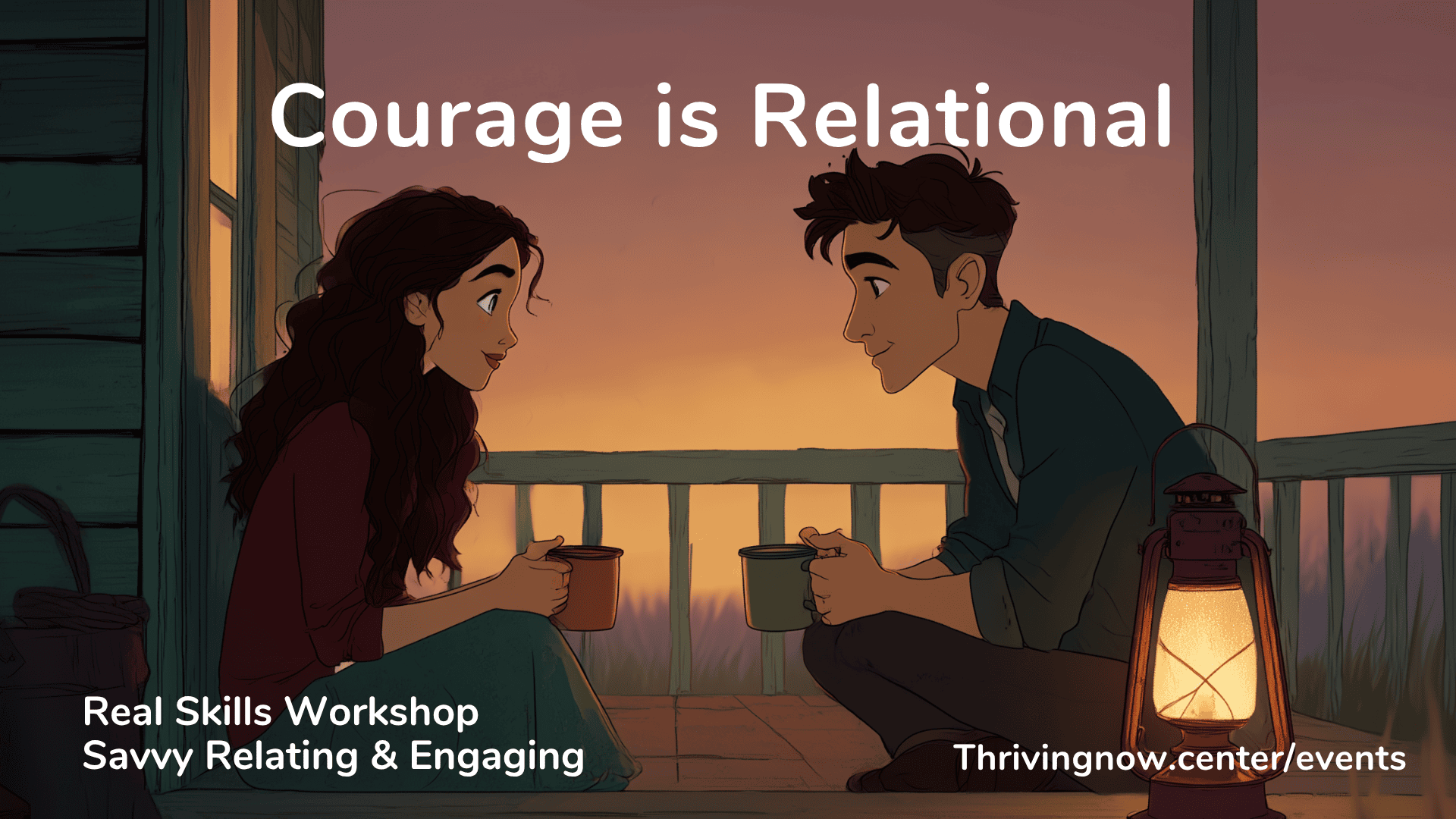
Courage is profoundly misunderstood. We often picture a heroic figure rushing into danger, acting without hesitation, hair blowing perfectly in the wind. Then we compare our shaking, pausing, asking for help, saying no, or trying again with that polished myth—and conclude we are not courageous.
Real courage is usually quieter.
It can be holding the hand of a dying friend week after week when hospitals frighten you. Telling a medical authority what is true for your body. Renting the mobility aid your pride does not want but your knee needs. Staying present with an unmet yearning. Declining an invitation that would cost more courage than it is worth. Returning to a difficult skill after frustration.
Courage is not a permanent identity or a fixed quantity we should display on demand. It is an energy that arises in relationship—with our body, purpose, support, history, environment, and what matters now.
Courage Is Different From Bravery
Bravery often has a bias toward action: feel the fear, gather adrenaline, rush through, do it anyway. That capacity can be lifesaving. Sometimes the body takes over and does the heroic thing before reflection is possible.
Courage has more room for presence.
It slows down enough to ask:
- What am I actually afraid of?
- Is this danger current, remembered, projected, or some mixture?
- What matters enough to call my heart forward?
- Is action right—or is restraint, help, preparation, or departure wiser?
- Can I stay with myself as I move through this?
Bravery may narrow attention toward the rescue. Courage may open attention to the whole reality: the person who needs help, your own depleted body, the consequences, the available support, and whether this is yours to do.
Neither is morally superior. They are different energies. Knowing the difference helps you stop using “courage” as another command to override yourself.
Courage Begins as a State of Being
Settle into your chair. Feel your feet. Let yourself arrive without needing to perform anything.
Courage can feel like settling and strengthening at once: life force becoming available while your presence grows more solid. You may be calm and confident—or shaky, devoted, and still here.
It is not necessarily a dramatic sensation. You may recognize it only in retrospect: That was hard, and I stayed with it. I did not abandon myself. I looked for support. I kept returning to what mattered.
We tend to recognize the act and miss the courageous state that made it possible. We praise the speech but overlook the hours of being with fear. We notice the boundary but not the tender inner work that allowed a no to form.
Presence with what is hard is already an expression of courage—even before the visible outcome.
Tapping: Perhaps I Am More Courageous Than I Think
Side of the Hand: Even though I do not think I have much courage, and I judge myself for what I should have done, no one gave me an operator’s manual for courage. I am open to recognizing forms of courage that do not look heroic.
Top of the Head: Maybe I am more courageous than I think.
Eyebrow: No, that cannot be possible.
Side of the Eye: I am afraid so often.
Under the Eye: Perhaps feeling fear does not cancel courage.
Under the Nose: I keep turning toward things that matter.
Chin: I keep trying to face what is real.
Collarbone: Courage may not feel how I was taught it should feel.
Under the Arm: There may be no cape or heroic picture.
Top of the Head: Sometimes courage is quiet presence.
Eyebrow: Sometimes it is asking for help.
Side of the Eye: Sometimes it is letting myself tremble.
Under the Eye: Sometimes it is not running from my own truth.
Under the Nose: I have walked many hard steps to be here.
Chin: I can acknowledge them without inflating myself.
Collarbone: Courage has already moved through me.
Under the Arm: I want to become more able to recognize it.
Top of the Head: My fear may be visible—and my courageous heart is here too.
Your Courage Changes With the We-Space
The same person may feel courageous in one relationship and nearly voiceless in another. That is not hypocrisy or failure. Nervous systems are relational.
Courage is affected by:
- Sleep, nourishment, health, pain, and accumulated stress.
- Whether another person feels safe, attuned, dismissive, or coercive.
- Whether you have practiced the situation before.
- The presence of allies, kin, spiritual support, or co-regulation.
- Power differences and real consequences.
- How much courage recent days have already required.
- Whether the action genuinely matters to you.
A trusted person sitting nearby can make an avoided task possible. A picture, statue, prayer, or remembered connection may help you feel accompanied. A practice conversation can build a neural path before you need it under pressure.
Support does not make the courage less yours. A bridge does not make walking fraudulent.
This also means today’s capacity is not a moral promise about tomorrow. If you managed something yesterday and cannot today, look at the relational field before attacking your character.
The Burden of “Being Courageous”
If someone calls you courageous, your system may hear a job description:
Now I have to face every fear. Fight every injustice. Rescue everyone. Say yes to every difficult thing. Never collapse. Never need rest.
No wonder part of you rejects the identity.
Courage is more useful as an available energy than a permanent role. You can be courageous when it is in your thriving interest and have strong boundaries when it is not. In fact, refusing the heroic assignment may be the courageous move.
Some fears are reasonable. Some people are dangerous. Some experiences are too expensive. Some parties, causes, or relationships would consume courage while violating consent or draining the capacity you need for what matters more.
You are allowed to steward your courage.
Tapping: I Reject the Heroic Burden
Side of the Hand: Even though I reject being “the courageous one,” especially if it means I have to do all those things, I honor the part of me that refuses grotesque expectations. I want courage without compulsory heroism.
Top of the Head: Do not call me courageous if it becomes a burden.
Eyebrow: I do not want to face every fear.
Side of the Eye: Some fears are really reasonable.
Under the Eye: I am afraid of certain people for good reasons.
Under the Nose: I do not want courage used against my boundaries.
Chin: I do not owe every challenge my life force.
Collarbone: I want freedom to choose what matters.
Under the Arm: I want freedom not to do it anyway.
Top of the Head: Courage is an energy, not my prison.
Eyebrow: I can call on it when it serves thriving.
Side of the Eye: I can rest when my tank is low.
Under the Eye: I can say no to courage-expensive dynamics.
Under the Nose: I can protect energy for what matters more.
Chin: Boundaries can be courageous too.
Collarbone: So can uncertainty and “Tell me more.”
Under the Arm: I release the cape and keep my heart.
Top of the Head: My courage belongs in relationship with my freedom, wisdom, and values.
Ask Whether It Is Worth the Courage
Before spending courage, ask: Why does this matter to me?
If the answer is unclear, pause. The demand may come from obligation, image, or somebody else’s definition of bravery.
You can tap or reflect:
It would take courage to go. It would take courage to do this. I am not yet clear whether it matters to me. Do I have enough courage to find out—with freedom not to proceed?
Some situations are courage-expensive because they contain coercion, unpredictability, or chronic mismatch. Avoiding them may conserve capacity rather than prove cowardice.
Other situations are difficult and deeply aligned. A professional gathering may matter to your work and relationships, while an injured knee makes the physical reality impossible without support. Courage is not toughing it out on concrete for twelve hours. It may be facing pride, renting a scooter, learning how it works, risking awkwardness, and letting your body participate.
Being with reality lets courage become practical.
Courage Can Say Yes, No, Help, or Not Yet
We mistake courage for forward motion. Yet some of the most healing moments occur when a person says no to what they have always accepted.
The words may be awkward and full of explanation. The nervous system may shake. Still, a pattern changes.
Courage can sound like:
- “I care about you, and I need to tend to myself tonight.”
- “I want to go, and I need mobility support.”
- “I cannot do that, but I can hold a good thought for you.”
- “I need help preparing for this conversation.”
- “I do not know yet. I need time.”
- “This space does not feel consensual enough for me.”
- “I am going to rest so I have capacity for what matters tonight.”
Acts not taken can arise from courage too. Self-care is not always a candle and bubble bath. It can be filing taxes, practicing a hard conversation, leaving a depleting situation, or choosing not to use courage on the grocery store because tomorrow is a better fit.
Authority Activates Old Programs
Authority can trigger immediate compliance, rebellion, freeze, avoidance, or intimidation. These reactions are ancient. Hierarchy mattered to survival.
The real skill is not eliminating the first reaction. It is creating even a millisecond of inner relationship before the program owns the whole response.
Ask:
- Does this person legitimately steward this space?
- What agreement did I enter by being here?
- Do they have information I do not—like a lifeguard seeing a riptide?
- Is the request inconvenient, unwise, harmful, or merely not my preference?
- Is this authority real, exaggerated, or claimed without consent?
- Do I need to obey now and question later?
- Would resistance protect integrity—or simply discharge an old reflex?
Blind obedience and blind rebellion can both cause harm. Courage allows response.
A security worker may enforce a foolish water-bottle rule. You can throw away the bottle, preserve your evening, and later decide whether to challenge the policy. That is different from collapsing internally or carrying charged resentment for a decade.
With abusive or narcissistic power, courage may be neutral and matter-of-fact. Arguing can feed the dynamic. Sacred omission, narrow communication, and exit may protect downstream capacity.
Tapping: Finding Choice Around Authority
Side of the Hand: Even though authority activates me fast, my primitive brain learned hierarchy for a reason. I honor the impulse to obey, rebel, freeze, or disappear. I am practicing one small pause so I can notice what kind of authority and situation this actually is.
Top of the Head: I hate being told what to do.
Eyebrow: Or I feel I must obey immediately.
Side of the Eye: This reaction is very old and very fast.
Under the Eye: Sometimes the person really is the steward here.
Under the Nose: Sometimes they only believe they own me.
Chin: Sometimes compliance protects life.
Collarbone: Sometimes conscience requires a no.
Under the Arm: I want enough courage for discernment.
Top of the Head: Is immediate harm involved?
Eyebrow: What agreement governs this space?
Side of the Eye: What do I know, and what might they know?
Under the Eye: I can respond now and question later.
Under the Nose: I can obey without surrendering my inner authority.
Chin: I can resist without making reaction my master.
Collarbone: My freedom matters, and reality matters.
Under the Arm: Courage can help me stay present between the lines.
Top of the Head: I am building a wiser relationship with power—inside me and around me.
When Courage Disappears
Courage can run through your fingers after you were sure you had it. Look for conditions, not character defects.
Common drains include:
- Exhaustion, hunger, pain, isolation, or sensory overload.
- A trusted face becoming bored or unavailable.
- Harsh self-talk: You teach this. Why are you struggling?
- Authority or an old attachment wound entering the field.
- An intuition you cannot yet translate into words.
- Spending courage repeatedly without replenishment.
- Trying to force an action that is not truly a yes.
The beatings do not improve morale. If the tank is empty, shaming it does not create fuel.
Replenishment may mean rest, food, companionship, privacy, rehearsal, spiritual connection, finishing a practical task, or deciding not to spend courage now. Muscles grow through use and recovery. Conserving forever weakens capacity; using everything before a marathon is not training either.
Rebuilding Trust After Freeze, Flight, or Compliance
When you look back and wish you had acted differently, remember: the primitive brain ran the best program it had. Freeze, silence, compliance, dissociation, fight, and escape were inherited and learned protections.
Reflection can help reprogram what happens later. Recrimination cannot rewrite what happened.
Mine the experience:
- What did my nervous system detect?
- What program ran?
- What helped even a little?
- Where did I need support, practice, rest, or an exit?
- What would a different first five seconds look like?
- Can I rehearse that with writing, tapping, or a trusted person?
Written mental dialogue can help. Imagine what they might say, write your response, notice where you flee, and try another path. Practice makes a route more available under stress.
You are not promising perfection. You are adding options.
Tapping: I Still Have a Primitive Brain—and a Courageous Heart
Side of the Hand: Even though I think I should have been braver and done it differently, that is not what happened. My primitive brain ran the program it knew. I want to learn without using the past as a weapon against myself.
Top of the Head: I should have grabbed the sword and slain the dragon.
Eyebrow: That is so not what happened.
Side of the Eye: This regret does not define my courage.
Under the Eye: I have courage to acknowledge what happened.
Under the Nose: I have courage to admit I wish it were different.
Chin: I can prepare to respond differently—maybe.
Collarbone: I am not the same age or in the same resources now.
Under the Arm: I have come a long way.
Top of the Head: I still have a primitive brain.
Eyebrow: It still gets first dibs sometimes.
Side of the Eye: I can tap with it instead of fighting forever.
Under the Eye: I can ask for a buddy or practice the words.
Under the Nose: I can recover faster after the old program runs.
Chin: I can honor every new option.
Collarbone: I still have a courageous heart too.
Under the Arm: I would not be here doing this work without it.
Top of the Head: Trust returns as I meet my protection with respect and keep practicing choice.
Practices for Living This Skill
- At day’s end, ask, “Where was something hard, and where did I stay with it?” Name the courage before evaluating the outcome.
- Make a courage ecology map: people, places, body conditions, practices, and spiritual connections that increase or drain capacity.
- Before a courage-expensive action, ask what matters and whether this is the best use of your tank today.
- Rehearse one difficult conversation with a trusted person or in writing. Include the moment when you usually freeze or flee.
- Practice a one-breath authority pause: Is this legitimate stewardship, coercion, danger, or inconvenience?
- Choose one act of restorative self-care that faces reality rather than merely distracting from it.
- Ask for accompaniment without diminishing your ownership: “Would you stay with me while I do this?”
- Honor a past act your younger self survived. Notice the hardiness that brought you here.
- Deliberately decline one unnecessary courage expense and feel what becomes available afterward.
Bringing It Into Your Life
Courage is not proof that fear has disappeared. It is the heart becoming available in relationship with what is real.
Some days courage will carry you into action. Some days it will help you wait, ask, adapt, say no, obey a legitimate safety instruction, or refuse false authority. Sometimes it will vanish because your organism has spent enough. Sometimes support will bring it back.
Do not top off your courage tank only to demand more heroic output. Let acknowledgement turn hard experience into hardiness. Let rest compound capacity. Let the people and practices that help you feel accompanied matter.
You have already used courage to reach this life. You do not need to wear it as a title. Keep it relational, precious, and free.
Settle. Strengthen. Listen for what matters. Let the courageous heart choose its form.
Continue the Conversation
Questions, reflections, and real-life examples are welcome. Continue the conversation about Courage is Relational in the Thriving Now Center.